
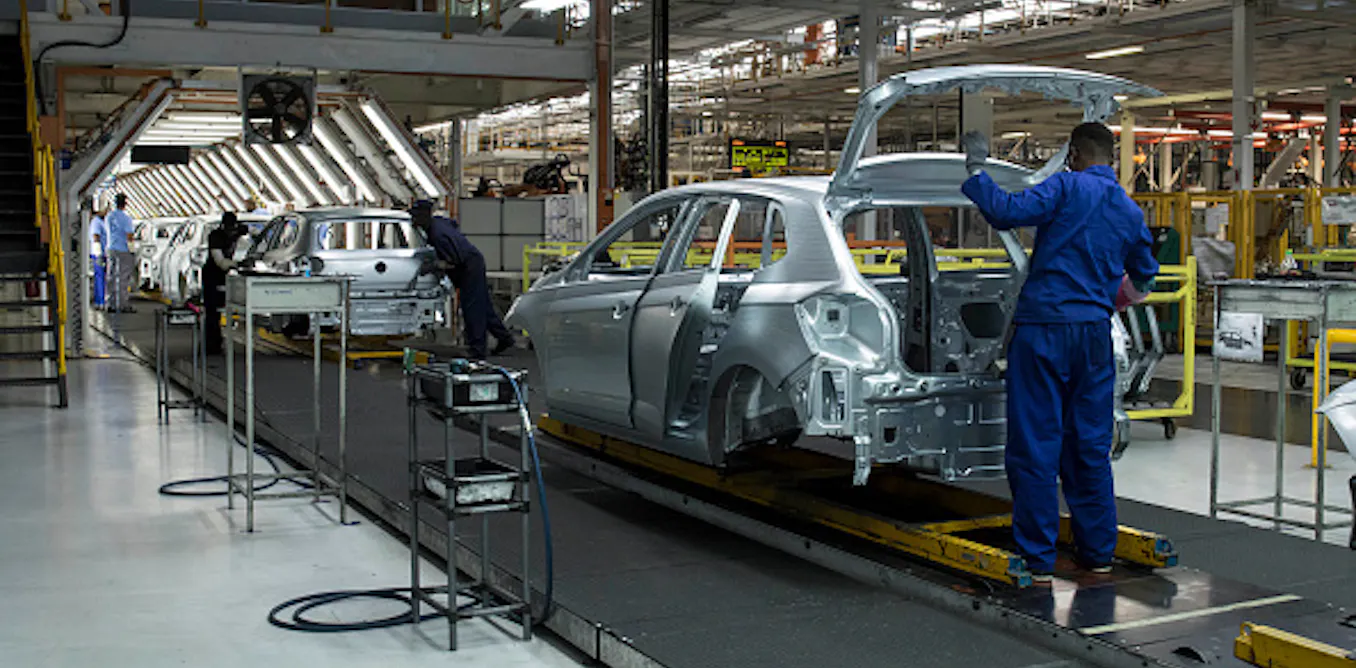
The global automotive industry continues to undergo significant transformation, driven by technological innovation, changing consumer behavior, and the restructuring of production and supply chains. In Africa, two countries stand out as the main drivers of the sector: South Africa and Morocco.
According to recent data from the International Organization of Motor Vehicle Manufacturers (OICA), South Africa remained the leading vehicle producer on the continent in 2024, with a total of 599,755 units manufactured. Despite maintaining its leading position, this result represents a decline of about 5% compared to the previous year and fell short of the targets set under the Automotive Master Plan 2035.
South Africa’s automotive sector, which hosts production facilities for global brands such as Volkswagen, Toyota, and Mercedes-Benz, is currently facing several challenges. These include increasing competition from imported vehicles—particularly from China—limited domestic demand, and low levels of local component integration. This situation has placed pressure on the industry and contributed to the closure of several manufacturing facilities in recent years.
On the other hand, Morocco continues to strengthen its position as one of the most dynamic industrial hubs on the continent. In 2024, the country produced 559,645 vehicles, marking a 5% increase and securing the 23rd position in the global ranking. This positive performance reflects consistent investment, supportive industrial policies, and strong integration into global automotive value chains.

GLOBAL OUTLOOK: CHINA IN THE LEAD
At the global level, vehicle production reached approximately 92 million units in 2024. China, the United States, and Japan accounted for more than half of this total, highlighting their dominant role in the industry.
China stood out as the undisputed global leader, producing more than 31 million vehicles—exceeding the combined output of the United States and Japan. The country’s growth has been driven by strong domestic demand, rapid expansion of the electric vehicle segment, and a significant increase in exports.
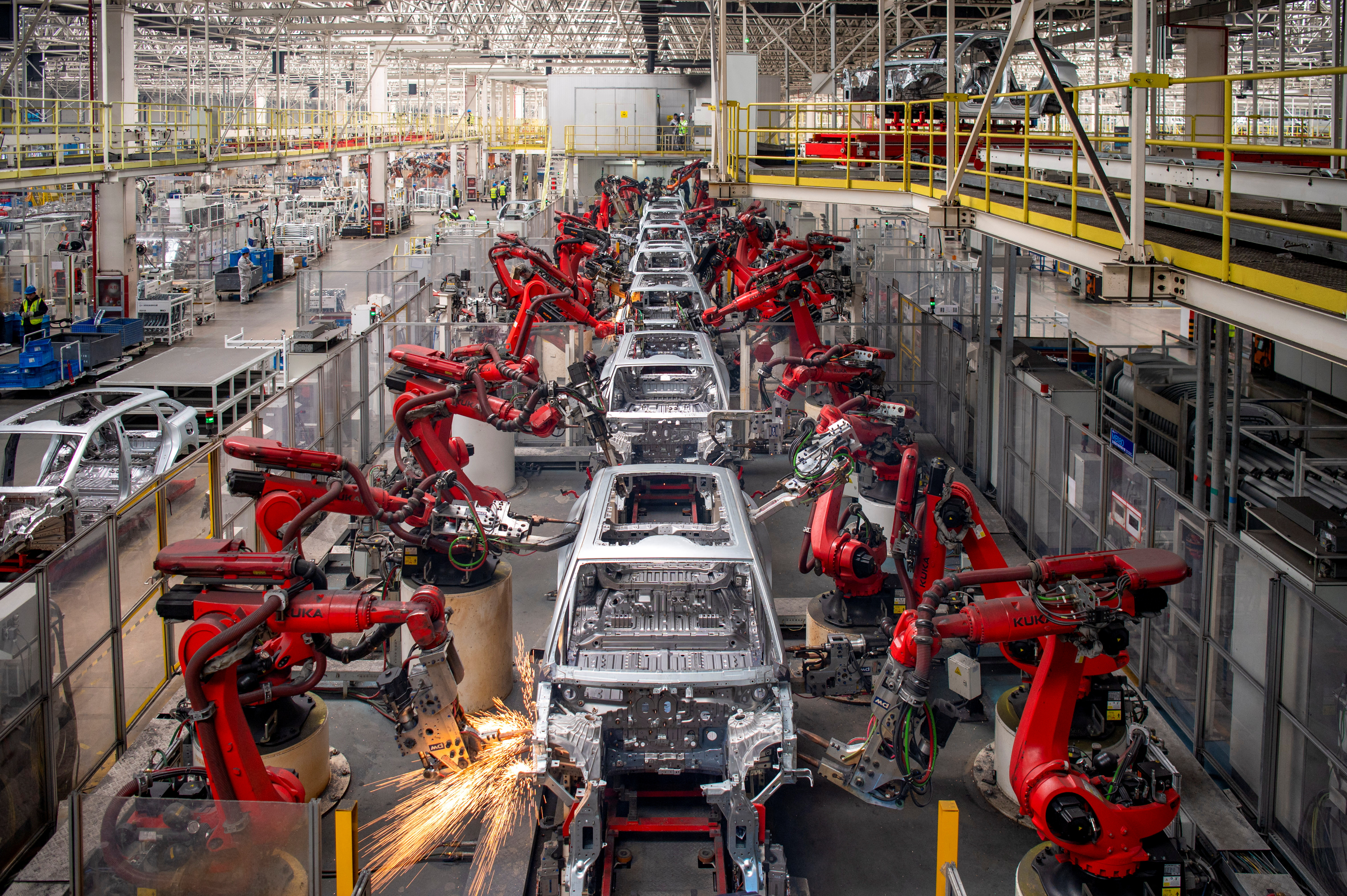
In the United States, production remained substantial, with a stronger focus on commercial vehicles. Meanwhile, emerging markets such as India, Mexico, and Brazil continue to gain ground and increase their importance within the global automotive landscape..
WHAT THIS MEANS FOR AFRICA
While South Africa works to regain growth momentum and address structural challenges within the sector, Morocco is steadily positioning itself as a strategic automotive production hub. The difference in performance between the two countries highlights the uneven pace of industrial development across the continent, while also demonstrating Africa’s significant potential for growth.
With rising mobility needs, the transition toward more efficient technologies, and the need to strengthen local value chains, the automotive sector represents an important opportunity for Africa’s economic and industrial development.
